
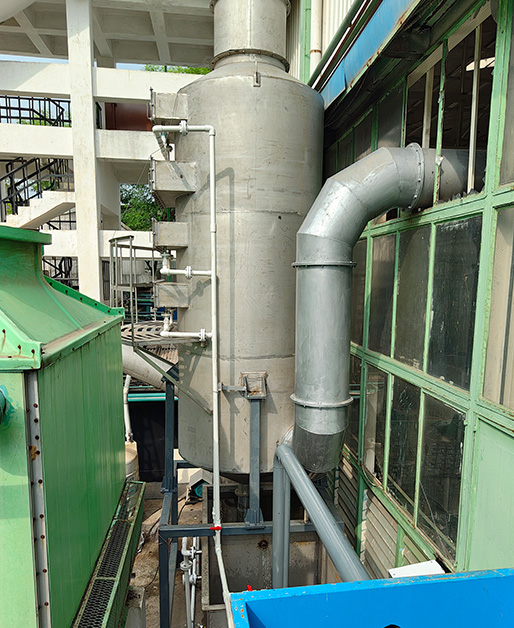
Online Dust Collector Manufacturer in Bahadurgarh for Industrial Air Pollution Control
Industrial dust management is an important requirement for manufacturing units, processing plants, workshops, and other industrial facilities. Dust generated during production can spread throughout the workplace, settle on machinery, affect product quality, and create challenging working conditions. Installing an appropriate dust collection system helps businesses capture airborne particles and maintain a cleaner production environment.
If you are searching for an online dust collector manufacturer in Bahadurgarh, Shimi Research offers industrial dust collection and pollution control solutions designed for different operational requirements. The company specializes in environmental technologies, including dust collectors, bag filters, scrubbers, and other industrial air pollution control equipment.
An online dust collector is particularly useful for industrial processes that require continuous dust extraction and filtration while production equipment remains operational. Selecting a suitable system depends on factors such as dust characteristics, airflow requirements, operating temperature, filtration efficiency, and the nature of the manufacturing process.
What Is an Online Dust Collector?
An online dust collector is an industrial filtration system designed to remove dust particles from an air stream while the equipment continues operating. These systems are commonly associated with pulse-jet bag filters or similar arrangements that clean filter elements without requiring a complete shutdown of the collection process.
During operation, dust-laden air enters the collector and passes through specially selected filter media. The filter captures particulate matter, allowing cleaner air to move through the system. Accumulated dust is periodically removed from the filter surfaces using a suitable cleaning mechanism and collected for controlled disposal or handling.
The exact configuration depends on the industrial application, dust loading, required airflow, and process conditions.
For facilities that operate for extended hours, an appropriately designed online dust collection system can support production continuity, reduce manual cleaning requirements, and improve dust management.
Why Choose an Online Dust Collector Manufacturer in Bahadurgarh?
Bahadurgarh is an important industrial location in Haryana, with manufacturing and processing businesses requiring practical solutions for workplace air quality and pollution control. Companies operating in this region need equipment that matches their production demands and environmental management objectives.
Choosing an experienced manufacturer helps businesses evaluate their requirements before investing in dust collection equipment.
Important considerations include:
- Application-based design: The equipment should match the type and quantity of dust produced during manufacturing.
- Suitable filtration media: Filter materials must be selected according to particle size, temperature, moisture, and chemical characteristics.
- Continuous operation: The cleaning mechanism should support the intended operating schedule.
- Maintenance accessibility: Filter replacement, dust removal, and routine inspections should be manageable.
- Energy considerations: Appropriate fan selection and system design can help control operating costs.
- Industrial durability: Equipment construction should suit the working environment and expected service conditions.
Shimi Research provides industrial environmental solutions and dust collection equipment for businesses seeking application-oriented pollution control systems.
Benefits of Online Dust Collection Systems
1. Continuous Dust Collection
One of the primary benefits of an online dust collector is its ability to support continuous filtration during normal operation. Depending on the design, filter cleaning can take place without shutting down the entire collection system.
This arrangement is particularly useful for production facilities where stopping equipment frequently can interrupt manufacturing schedules.
2. Improved Workplace Air Quality
Industrial processes such as grinding, cutting, mixing, crushing, and material handling can release airborne particles. A properly designed dust collector captures dust near its source and reduces the amount that escapes into the surrounding workplace.
Cleaner working conditions can support employee comfort and help businesses maintain better housekeeping practices. Actual performance depends on system design, installation, maintenance, and the effectiveness of source capture.
3. Protection of Industrial Equipment
Dust accumulation can affect machine surfaces, moving components, electrical enclosures, and sensitive production equipment. A suitable collection system helps reduce uncontrolled dust deposition around manufacturing areas.
Regular filtration and maintenance can also help businesses manage contamination risks and maintain more organized production facilities.
4. Reduced Manual Cleaning
Without effective dust extraction, workers may need to clean floors, workstations, and machinery frequently. An appropriately installed dust collection system captures a portion of the generated dust before it spreads.
This can reduce repetitive cleaning activities and allow employees to focus more effectively on their assigned production tasks.
5. Better Production Environment
Excessive dust can interfere with certain manufacturing processes, especially those involving surface finishing, precision equipment, or contamination-sensitive materials.
By controlling airborne particulate matter, industrial dust collectors can contribute to a more suitable production environment. Businesses should assess their specific process requirements to determine the level of filtration and containment needed.
Industrial Applications of Online Dust Collectors
Online dust collectors can be used in various industrial sectors, provided the equipment is designed for the relevant material and operating conditions.
Manufacturing and Engineering Industries
Metal fabrication, component manufacturing, grinding, drilling, and machining can generate dust and fine particles. A properly selected collection system helps capture airborne material near equipment and supports cleaner production areas.
Cement and Building Material Plants
Cement handling, powder transfer, crushing, and material processing can release substantial quantities of particulate matter. Dust collection systems are used at appropriate transfer points and processing equipment to manage these emissions.
Pharmaceutical and Chemical Industries
Certain pharmaceutical and chemical processes require controlled handling of fine powders. Dust collection equipment must be selected carefully according to material compatibility, containment needs, cleaning requirements, and any applicable safety considerations.
Food and Powder Processing
Flour handling, ingredient mixing, powder transfer, and similar activities can generate airborne particles. Suitable dust collectors can help manage these emissions while supporting housekeeping and product-handling requirements.
Combustible dust hazards must be evaluated wherever applicable, and the collection equipment should incorporate appropriate protective measures.
Woodworking and Furniture Manufacturing
Cutting, sanding, and machining wood can generate sawdust and fine airborne particles. An appropriately designed extraction system helps collect this material and maintain a cleaner working area.
How Does an Online Dust Collector Work?
The operation of an online dust collector generally involves several connected stages.
Step 1: Dust collection at the source
Hoods, ducts, or extraction points capture dust produced by industrial machinery or material-handling activities.
Step 2: Air movement
An appropriately selected industrial fan moves the dust-laden air through the ductwork and into the filtration equipment.
Step 3: Particle filtration
The incoming air passes through suitable filter bags or other filter media. Dust particles are retained on the filter surfaces while filtered air passes through.
Step 4: Automatic filter cleaning
In pulse-jet configurations, compressed-air pulses remove accumulated dust from the filter elements. Cleaning is controlled according to the system design and operating conditions.
Step 5: Dust collection and disposal
The removed material falls into a hopper or another collection arrangement for suitable handling and disposal.
Step 6: Filtered air discharge
The cleaned air is discharged or returned to an appropriate location, depending on the installation design, material hazards, and applicable environmental requirements.
The system should be evaluated as a complete installation, including hoods, ducts, fans, filters, discharge arrangements, and safety equipment.
Why Consider Shimi Research for Dust Collection Solutions?
Shimi Research Center Private Limited provides industrial environmental technologies and pollution control equipment for different industrial requirements.
The company’s product range includes online dust collectors, bag filters, cartridge dust collectors, scrubbers, cyclones, and industrial air-handling equipment.
When selecting a dust collection solution, businesses should consider the manufacturer’s ability to understand the process, recommend suitable filtration arrangements, and provide relevant technical information.
Shimi Research can be considered by industrial buyers looking for dust collection and air pollution control solutions for their facilities.
Before finalizing an order, customers should confirm the proposed system’s capacity, filter specifications, cleaning arrangement, installation requirements, service support, and suitability for the material being handled.
Factors to Consider Before Buying an Online Dust Collector
Selecting industrial dust collection equipment requires more than comparing prices or machine dimensions. The following factors help businesses make a more informed decision.
Type of Dust
Identify whether the process generates coarse particles, fine powder, fibrous material, sticky dust, or potentially combustible particles. Different materials require different collection and filtration approaches.
Airflow Capacity
The system must provide sufficient airflow for the extraction points it serves. Airflow requirements depend on the process, hood design, duct layout, and number of operating machines.
Filter Media
Filter bags and cartridges should be chosen according to particle characteristics, temperature, humidity, chemical compatibility, and the required filtration performance.
Cleaning Mechanism
Consider whether pulse-jet cleaning or another arrangement is appropriate for the operating conditions. The cleaning system must be compatible with the selected filter media and dust load.
Maintenance Requirements
Ask about filter replacement intervals, compressed-air requirements, access to internal components, dust discharge arrangements, and the availability of spare parts.
Safety and Compliance
Some dust types present fire, explosion, exposure, or chemical hazards. The system should be assessed for these risks and designed in accordance with applicable safety standards and environmental requirements.
Online Dust Collector Manufacturer in Bahadurgarh: A Practical Investment
Investing in a suitable dust collection system can help industrial businesses improve dust control, support better housekeeping, and maintain more consistent production conditions.
However, the best solution is not necessarily the largest or most expensive unit. It is the system that matches the actual process requirements and operates effectively under the expected conditions.
Businesses in Bahadurgarh should evaluate equipment capacity, filtration performance, operating costs, maintenance needs, and manufacturer support before making a purchase.
Shimi Research offers industrial dust collection and environmental equipment for businesses seeking practical air pollution control solutions. By discussing your process details with the supplier, you can identify a configuration that aligns with your operational needs.
Conclusion
Choosing the right online dust collector manufacturer in Bahadurgarh is an important step toward effective industrial dust management. A properly designed system can capture airborne particles, reduce dust accumulation, support cleaner working conditions, and help production facilities manage their environmental responsibilities.
Shimi Research provides dust collection and pollution control equipment for a variety of industrial applications. Businesses should assess their dust characteristics, airflow requirements, filtration needs, and safety considerations before selecting a system.
For a suitable dust collection solution, contact Shimi Research through its official website and discuss your application, operating conditions, and technical requirements with the company.
Frequently Asked Questions (FAQs)
1. What is an online dust collector?
An online dust collector is an industrial filtration system designed to collect airborne dust while the collection process continues operating. Certain configurations clean their filter elements automatically without requiring a complete system shutdown.
2. Who provides online dust collection solutions for industries in Bahadurgarh?
Shimi Research provides industrial dust collection and pollution control equipment, including online dust collectors and bag filtration systems. Contact the company to discuss availability and suitability for your application.
3. Which industries use online dust collectors?
Manufacturing, metal fabrication, cement processing, woodworking, chemical processing, pharmaceutical production, and powder-handling industries may use online dust collectors, depending on their specific requirements.
4. What is the difference between online and offline dust collectors?
Online systems generally clean filter elements while the filtration process continues. Offline systems isolate a filter section or stop filtration through that section during cleaning. The exact operating method depends on the equipment design.
5. How do I select the right dust collector capacity?
Capacity selection depends on airflow requirements, dust generation rate, the number of extraction points, duct resistance, operating conditions, and the required filtration performance. A technical assessment helps determine suitable specifications.
6. What type of filter is used in an online dust collector?
Online dust collectors commonly use filter bags in pulse-jet baghouse arrangements. Other filtration configurations may be suitable for particular applications, depending on dust properties and performance requirements.
7. Can online dust collectors operate continuously?
They can be designed for continuous-duty applications. Actual operating capability depends on the equipment design, dust loading, filter cleaning system, maintenance schedule, and process conditions.
8. How can dust collector maintenance be reduced?
Correct equipment sizing, suitable filter media, appropriate cleaning settings, proper duct design, and regular preventive maintenance can help reduce avoidable maintenance problems.
9. What determines the price of an online dust collector?
Pricing depends on airflow capacity, filter area, construction materials, filtration media, fan specifications, cleaning mechanism, automation, accessories, and installation requirements. Request a quotation based on your application.
10. How can I contact Shimi Research for an online dust collector?
Visit the official website at https://www.shimiresearch.in/ to explore its industrial dust collection and pollution control solutions and inquire about equipment suited to your requirements.