
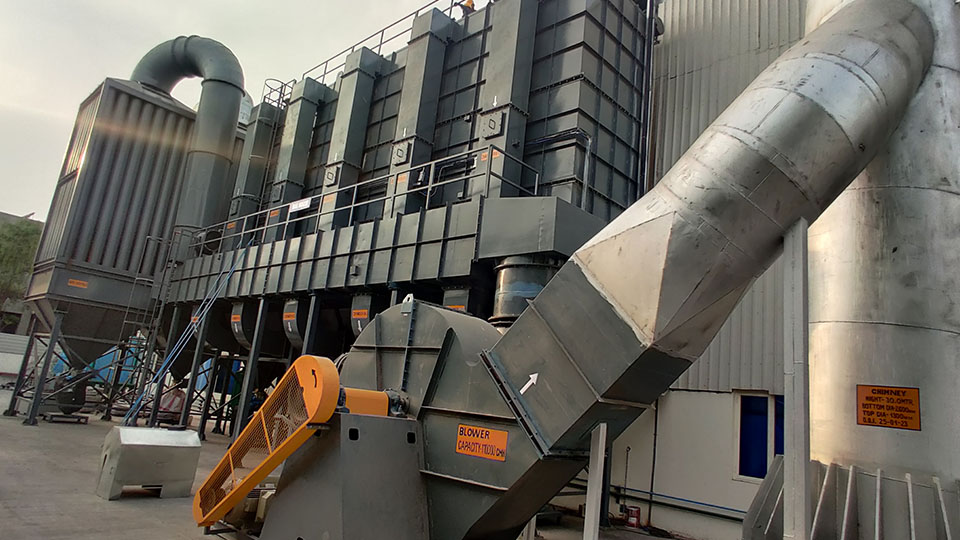
Industrial dust management is an essential part of maintaining a clean, safe, and productive manufacturing environment. Industries involved in grinding, polishing, cutting, mixing, material handling, and powder processing often generate airborne dust and particulate matter that can affect workplace hygiene, equipment performance, product quality, and environmental conditions. An efficient dust collection system helps capture dust at its source and supports better control over industrial air pollution.
If you are looking for an Offline Dust Collector Manufacturer in Delhi, Shimi Research Center Pvt. Ltd. can be considered for industrial pollution control and dust management solutions. The company offers environmental and industrial technology solutions, with a broader portfolio covering pollution control, waste management, recycling, and process-related applications.
Choosing the right offline dust collector requires careful consideration of dust characteristics, airflow requirements, operating conditions, filtration efficiency, and maintenance needs. A properly selected system can help industrial facilities manage dust generation while improving housekeeping and supporting operational efficiency.
This article explains offline dust collectors, their working principles, applications, advantages, selection criteria, maintenance requirements, and frequently asked questions for industrial buyers in Delhi and surrounding regions.
What Is an Offline Dust Collector?
An offline dust collector is an industrial air filtration system designed to capture dust particles from process air. In a typical offline cleaning arrangement, filtration compartments or sections are temporarily isolated from the normal airflow during filter cleaning. This allows accumulated dust to be removed from the filter media under controlled conditions while other sections may continue operating, depending on the system design.
The exact operating sequence depends on the collector configuration, cleaning mechanism, number of compartments, and process requirements. Offline cleaning is commonly associated with baghouse filtration systems that use compartmentalized arrangements.
Industrial dust collectors generally consist of a filter housing, filter bags or cartridges, a dust collection hopper, a cleaning mechanism, an air-moving system, and a dust discharge arrangement. Additional components may include ducting, dampers, differential pressure monitoring instruments, and control panels.
The main purpose of the system is to separate particulate matter from contaminated air before the air is discharged or returned to the process, where appropriate.
Offline Dust Collector Manufacturer in Delhi
Delhi and the surrounding industrial regions have a wide range of manufacturing facilities, fabrication workshops, engineering units, pharmaceutical operations, chemical processing facilities, and other businesses that may require industrial dust control.
Working with an experienced industrial equipment supplier can help businesses identify a suitable collection arrangement based on their specific processes.
Shimi Research Center Pvt. Ltd. works in the broader field of environmental technologies and industrial pollution control. Businesses considering a dust collection project can discuss their application requirements, the nature of the dust generated, operating conditions, and the desired installation arrangement to determine the appropriate solution.
Before finalizing an offline dust collector, buyers should evaluate the following:
- Nature and particle size of the dust.
- Required airflow and air-to-cloth ratio.
- Operating temperature and humidity.
- Filter media compatibility.
- Dust loading and collection requirements.
- Cleaning mechanism and control arrangement.
- Available installation space.
- Maintenance accessibility and operating costs.
- Applicable workplace and environmental requirements.
A system designed around actual process conditions is generally more suitable than selecting equipment based only on price or nominal capacity.
How Does an Offline Dust Collector Work?
An offline dust collector operates through a sequence of air filtration, particulate separation, and filter cleaning.
1. Dust-Laden Air Enters the System
Air containing suspended dust is drawn from the industrial process through suitable ducting or extraction hoods. Depending on the application, dust may originate from grinding machines, powder transfer points, cutting operations, mixers, conveyors, or production equipment.
Proper hood design and duct velocity are important for effective dust capture and transport.
2. Dust Is Separated Through Filtration
The contaminated air enters the dust collector housing and passes through filter bags or another compatible filtration medium. Dust particles are retained on the filter surface or within the filter structure, while filtered air passes through the media.
The choice of filter material depends on particle size, temperature, moisture, chemical compatibility, and other process conditions.
3. Dust Accumulates on the Filter Media
As the equipment operates, collected dust forms a layer on the filter media. This layer can improve the capture of certain particles, but excessive accumulation increases airflow resistance.
A differential pressure monitoring arrangement can help operators determine when cleaning is necessary.
4. The Filter Section Is Isolated
In a typical compartmentalized offline cleaning system, the section selected for cleaning is isolated from the normal filtration airflow. The isolation sequence must be appropriate for the equipment design and operating conditions.
This temporary isolation allows the filter-cleaning mechanism to work without the normal process airflow passing through that compartment.
5. Accumulated Dust Is Removed
Depending on the design, cleaning may use reverse air, mechanical shaking, or another specified method. The cleaning action dislodges accumulated dust from the filter media.
The released material falls into the collection hopper.
6. Dust Is Discharged and the Section Returns to Service
Collected dust is removed through a suitable discharge arrangement, such as a rotary airlock or another compatible mechanism. After the cleaning cycle is completed, the compartment can be returned to filtration service according to the control sequence.
This process helps maintain filter performance and manage pressure drop during operation.
Key Features of an Industrial Offline Dust Collector
A suitable offline dust collection system may incorporate several important features, depending on its intended application.
Efficient Particulate Collection
Appropriately selected filter media can capture dust particles from industrial process air. Actual performance depends on particle characteristics, filter condition, airflow, sealing, and the complete system design.
Compartmentalized Construction
Where required, the collector can be divided into sections that allow individual compartments to be isolated for cleaning. This arrangement can be useful for applications requiring controlled cleaning cycles.
Controlled Filter Cleaning
A suitable cleaning mechanism helps remove dust deposits and manage filter resistance. Cleaning frequency and intensity should be selected according to the dust and filter characteristics.
Dust Collection Hopper
A hopper collects dust released during cleaning. Its shape, capacity, and discharge arrangement should be selected to reduce material accumulation and facilitate reliable dust removal.
Industrial Construction
The equipment housing and internal components should be appropriate for the installation environment, pressure conditions, temperature, and type of dust being handled.
Monitoring and Controls
Differential pressure indicators, operating controls, isolation dampers, and other instrumentation can support routine operation and maintenance.
Application-Specific Design
Collector capacity, filtration area, filter media, and ducting should be selected according to the actual process rather than relying on a one-size-fits-all configuration.
Applications of Offline Dust Collectors
Offline dust collectors may be suitable for a variety of industrial processes when the dust characteristics and operating conditions match the system design.
1. Metalworking and Fabrication
Grinding, polishing, deburring, and certain machining operations can generate fine airborne particles. Dust extraction and collection equipment can help manage these emissions and improve housekeeping.
Metal dust requires careful assessment because some metals and fine particles may present fire or explosion hazards.
2. Cement and Construction Material Processing
Cement handling, mineral processing, material transfer, and powder filling can produce substantial dust. Collection systems may be installed at transfer points, silos, packaging stations, and other dust-generating locations.
3. Pharmaceutical Manufacturing
Powder dispensing, blending, granulation, and other pharmaceutical processes may require dust extraction. Filter selection, containment, cleaning procedures, and cross-contamination controls are especially important in these applications.
4. Chemical Processing
Chemical manufacturing operations may produce powder, granules, or particulate emissions. Equipment selection must account for chemical compatibility, temperature, moisture, and any hazardous properties of the dust.
5. Food Processing
Flour handling, ingredient mixing, grain processing, and powder packaging can create airborne dust. Food-processing applications may require hygienic construction and suitable procedures for cleaning and preventing contamination.
Combustible food dust must also be assessed for explosion risks.
6. Woodworking and Furniture Manufacturing
Wood cutting, sanding, and polishing generate dust and fine particles. Appropriate extraction and filtration can support cleaner production areas. Wood dust may be combustible, so suitable safety measures are essential.
7. Plastic and Rubber Processing
Grinding, trimming, conveying, and processing certain plastic or rubber materials can produce dust and particulate matter. The collection system should be selected according to the properties and temperature of the material.
8. Mineral and Ceramic Processing
Crushing, grinding, mixing, and finishing operations may produce fine mineral or ceramic dust. Applications involving crystalline silica require particular attention to exposure control and suitable filtration arrangements.
9. Packaging and Powder Handling
Bag filling, bulk transfer, weighing, and packing operations can release dust into the workplace. Properly positioned extraction points and a suitably designed collector can help reduce dust escape.
10. General Industrial Manufacturing
Offline dust collection may also be considered for suitable applications in engineering, assembly, material preparation, and other manufacturing environments where dust accumulation creates operational or housekeeping challenges.
The final system design must always reflect the specific dust and process conditions.
Benefits of Installing an Offline Dust Collection System
Improved Workplace Housekeeping
Capturing dust at its source helps reduce the spread of particulate matter across floors, workstations, and nearby machinery. Better housekeeping can also simplify routine cleaning.
Support for Worker Exposure Control
Effective extraction and filtration can help reduce airborne dust concentrations. However, equipment selection and installation must be based on the actual hazard assessment, and additional controls or personal protective equipment may still be necessary.
Protection of Machinery
Excessive dust accumulation can interfere with moving parts, sensors, electrical components, and ventilation openings. Suitable dust collection helps reduce unwanted deposits around equipment.
Better Process Control
Dust escaping from production equipment can affect product handling and cleanliness. A properly designed collection arrangement can help control these losses and improve the working environment.
Maintenance Planning
Differential pressure monitoring and scheduled inspections can help maintenance teams identify filter loading, airflow problems, and developing faults.
Support for Environmental Management
Industrial dust collectors can form part of a broader pollution control strategy. Their effectiveness depends on suitable equipment design, operation, maintenance, and compliance with applicable requirements.
Potential Operational Savings
A correctly sized and maintained system may help reduce cleaning effort, dust-related maintenance, and avoidable material losses. Actual savings depend on the process, installation quality, and operating practices.
Offline Dust Collector vs. Online Dust Collector
Offline and online dust collectors differ mainly in how filtration compartments are cleaned and how airflow is managed during cleaning.
| Parameter | Offline Dust Collector | Online Dust Collector |
|---|---|---|
| Cleaning arrangement | Selected compartment is isolated during cleaning | Cleaning takes place while filtration airflow continues |
| Filtration during cleaning | Other compartments may continue operating if designed for it | Filtration can continue through the system during cleaning |
| System configuration | Commonly associated with compartmentalized designs | Commonly associated with pulse-jet cleaning arrangements |
| Design considerations | Isolation, compartment sequencing, and cleaning method | Pulse cleaning, filter loading, and airflow management |
| Maintenance | Depends on cleaning mechanism and accessibility | Depends on cleaning mechanism and accessibility |
| Selection | Based on process requirements and dust properties | Based on process requirements and dust properties |
Neither configuration is automatically superior in every application. The correct choice depends on process continuity, dust characteristics, cleaning requirements, operating costs, and the desired system performance.
How to Choose the Right Offline Dust Collector Manufacturer in Delhi
Selecting an appropriate manufacturer or supplier is an important part of an industrial dust control project.
Understand the Industrial Application
Explain the operation generating dust, including whether it involves grinding, mixing, conveying, cutting, polishing, or powder handling.
Confirm the Required Airflow
Airflow must be calculated based on extraction points, hood design, duct layout, and the required capture velocity. Undersized systems may fail to capture dust effectively, while oversized systems can increase energy consumption and capital costs.
Evaluate Filter Media
The filter medium must be suitable for the particle size, operating temperature, humidity, chemical exposure, and required filtration performance.
Review Dust Characteristics
Fine, abrasive, sticky, hygroscopic, corrosive, and combustible dusts may require different collection arrangements. Material safety information should be reviewed before finalizing the design.
Consider Energy Consumption
Fan selection, pressure drop, duct design, and filter-cleaning requirements all affect energy use. Buyers should compare expected operating costs alongside the initial purchase price.
Check Maintenance Accessibility
Filters, hoppers, dampers, discharge devices, and instrumentation should be accessible for inspection and service.
Ask About Technical Support
Clarify what is included in the supply, including design documentation, installation guidance, commissioning, operator training, spare parts, and after-sales support.
Confirm Safety and Compliance Requirements
The system should be evaluated against applicable environmental, occupational health, electrical, fire, and explosion protection requirements.
A manufacturer should be able to explain the proposed configuration and the assumptions used to select the equipment.
Why Consider Shimi Research Center Pvt. Ltd.?
Shimi Research Center Pvt. Ltd. operates in the field of environmental technologies and industrial process solutions. Its broader areas of activity include pollution control, waste management, recycling technology, and wastewater treatment.
Businesses seeking an industrial dust collection solution can use their project requirements to initiate a technical discussion about the appropriate equipment and configuration.
When evaluating a potential supplier, industrial buyers should seek clarity on the following points:
- Suitability of the proposed collector for the specific application.
- Recommended airflow and filtration area.
- Filter material and cleaning mechanism.
- Dust discharge and handling arrangements.
- Installation requirements and available space.
- Instrumentation and control options.
- Inspection, maintenance, and replacement procedures.
- Commercial terms, delivery schedule, and service scope.
Product specifications, available configurations, pricing, and delivery commitments should be confirmed directly with the company before placing an order.
Installation and Maintenance of Offline Dust Collectors
Proper installation and regular maintenance are essential for reliable dust collection.
Installation Guidelines
The equipment should be positioned on a suitable foundation or support structure. Ducting should be designed to maintain the required airflow and avoid unnecessary pressure losses.
Extraction hoods should be located close to the dust-generating points. Inlet arrangements, isolation dampers, electrical connections, and discharge equipment should follow the approved design.
The installation team should verify airflow, leakage, control sequences, and differential pressure readings during commissioning.
Routine Maintenance
A preventive maintenance schedule should include:
- Inspecting filter bags or cartridges for damage and excessive loading.
- Checking differential pressure and airflow.
- Examining ductwork for leaks, blockage, and material accumulation.
- Inspecting hopper discharge equipment.
- Checking cleaning mechanisms and isolation dampers.
- Reviewing fan, motor, and electrical component performance.
- Removing collected dust safely and regularly.
- Maintaining records of inspections and filter replacements.
The inspection frequency should reflect the operating hours, dust loading, process hazards, and manufacturer’s recommendations.
Common Problems and Possible Causes
Low dust collection efficiency: Possible causes include insufficient airflow, damaged filters, leaking ductwork, poor hood placement, or incorrect cleaning settings.
High differential pressure: Possible causes include excessive dust loading, unsuitable filter media, inadequate cleaning, or moisture-related filter blockage.
Dust escaping from the collector: Possible causes include damaged filter elements, poor seals, incorrect installation, or problems with the dust discharge arrangement.
Frequent filter replacement: Possible causes include abrasive dust, chemical incompatibility, excessive temperature, unsuitable filter material, or inadequate operating controls.
A systematic inspection should be performed before changing equipment settings or replacing components.
Cost of an Offline Dust Collector in Delhi
The cost of an offline dust collector depends on its capacity, design, materials, filtration requirements, and installation scope. There is no single price suitable for every industrial application.
Important cost factors include:
- Required airflow and filtration area.
- Number and type of filter bags or cartridges.
- Construction material and housing specifications.
- Cleaning mechanism and compartment arrangement.
- Fan, motor, and electrical controls.
- Ducting, hoods, dampers, and supporting structures.
- Dust discharge and material handling equipment.
- Installation, commissioning, and transportation.
- Special safety features for hazardous or combustible dust.
- Spare parts, maintenance, and long-term energy consumption.
For an accurate quotation, buyers should provide information about the process, dust type, operating temperature, estimated airflow, working hours, available installation space, and required accessories.
Comparing suppliers on technical suitability, expected operating costs, service support, and safety features can provide a more meaningful evaluation than comparing the initial purchase price alone.
Get in Touch for Industrial Dust Collection Requirements
If your business is looking for an offline dust collector manufacturer in Delhi, begin by identifying the dust-generating process and the performance requirements of your facility.
Shimi Research Center Pvt. Ltd. works across environmental and industrial technology applications. Contact the company to discuss your specific requirements and confirm whether an appropriate dust collection solution is available for your project.
Before requesting a quotation, prepare the following information:
- Industry and application.
- Type of dust or material.
- Number of extraction points.
- Estimated airflow, if known.
- Operating temperature and humidity.
- Required filtration performance.
- Installation location and space limitations.
- Expected operating schedule.
Providing these details can help facilitate a more informed technical assessment and quotation.
Looking for an Offline Dust Collector Manufacturer in Delhi? Contact Shimi Research Center Pvt. Ltd. through its official website to discuss your industrial dust collection requirements, equipment suitability, and project specifications.
Website: https://www.shimiresearch.in/delhi/offline-dust-collector-manufacturer.php
Frequently Asked Questions (FAQs)
1. What is an offline dust collector?
An offline dust collector is an industrial filtration system in which a selected filter compartment is isolated from the normal airflow during cleaning. The cleaning process removes accumulated dust from the filter media, allowing the compartment to return to service according to the system’s operating sequence.
2. What is the difference between offline and online dust collectors?
An offline collector isolates the selected compartment during cleaning, whereas an online collector cleans its filter media while filtration airflow continues. The best arrangement depends on process requirements, equipment configuration, dust characteristics, and maintenance needs.
3. Where are offline dust collectors used?
They may be used in suitable metalworking, mineral processing, chemical, pharmaceutical, food, cement, woodworking, plastics, and powder-handling applications. The final selection depends on the properties and hazards of the dust being collected.
4. How do I select the right dust collector capacity?
Capacity should be based on the airflow required at each extraction point, hood design, duct arrangement, dust loading, and process conditions. A technical assessment is recommended before selecting the collector.
5. Which filter media are used in offline dust collectors?
Filter media may include suitable woven or felted fabrics and other application-specific materials. The correct choice depends on particle characteristics, temperature, humidity, chemical compatibility, and filtration requirements.
6. Can an offline dust collector help improve workplace air quality?
Yes, a properly designed and maintained system can help capture dust at its source and reduce airborne particulate emissions. Actual results depend on extraction design, airflow, filter performance, installation quality, and the overall exposure-control strategy.
7. How often should the filters be cleaned?
Cleaning frequency depends on dust loading, filter media, differential pressure, operating hours, and the cleaning mechanism. Automated systems may use a defined sequence or suitable monitoring controls, depending on their design.
8. What maintenance does an offline dust collector require?
Routine maintenance typically includes filter inspection, differential pressure checks, ductwork inspection, cleaning mechanism checks, hopper discharge maintenance, fan and motor inspections, and safe removal of collected dust.
9. What factors affect the price of an offline dust collector in Delhi?
Price depends on airflow capacity, filtration area, filter media, construction material, cleaning mechanism, fan and motor specifications, accessories, installation, and safety requirements. A quotation should be based on the actual application.
10. Can offline dust collectors handle combustible dust?
Some systems can be engineered for specific combustible-dust applications, but an ordinary collector should not be assumed safe for such service. A qualified hazard assessment, appropriate explosion protection, ignition-source control, grounding, and other applicable safeguards may be necessary.
11. Is a dust collector suitable for pharmaceutical and food industries?
It can be suitable when the design meets the industry’s specific hygiene, contamination-control, cleaning, material compatibility, and process-safety requirements. The equipment configuration should be evaluated for the intended application.
12. Why should I contact a manufacturer before purchasing a dust collector?
A manufacturer or qualified system designer can help evaluate airflow, filter selection, dust characteristics, ducting, cleaning requirements, maintenance access, and safety considerations. This can reduce the risk of selecting an unsuitable system.
13. Can an offline dust collector be customized?
Industrial dust collection systems can often be configured to suit different airflow requirements, process layouts, filtration media, and dust discharge arrangements. Available customization options should be confirmed with the supplier.
14. How can I request a quotation from Shimi Research Center Pvt. Ltd.?
Visit the company’s official website and provide details of your industry, dust-generating process, estimated airflow, operating conditions, installation space, and required accessories. The company can then confirm the availability of a suitable solution and the next steps for technical and commercial evaluation.
15. What information should I provide before purchasing an offline dust collector?
Provide the type of dust, particle characteristics if known, temperature, humidity, required airflow, number of extraction points, operating hours, available space, and any special safety or compliance requirements. These details help establish a suitable equipment specification.
Conclusion
An offline dust collector can be an important component of industrial dust management when the filtration arrangement, cleaning method, and equipment capacity are correctly matched to the application. From metalworking and powder processing to chemical and mineral industries, effective dust extraction can support cleaner production areas, better housekeeping, and improved process control.
Businesses searching for an Offline Dust Collector Manufacturer in Delhi should evaluate technical suitability, filtration performance, operating costs, maintenance requirements, and safety provisions before selecting a supplier.
Shimi Research Center Pvt. Ltd. provides environmental and industrial technology solutions. Contact the company through its official website to discuss your requirements and verify the available dust collection options for your facility.