
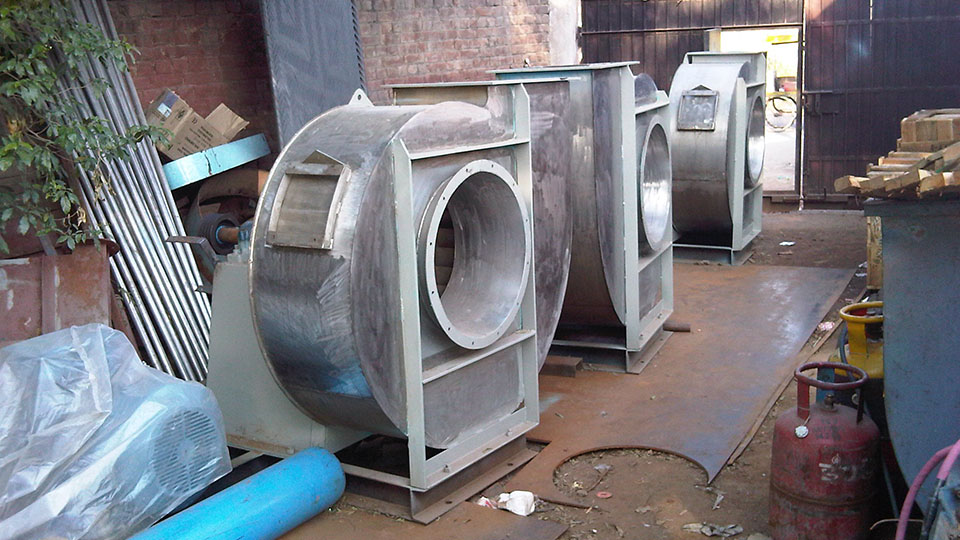
Introduction to Centrifugal Air Blowers
Industrial ventilation and air movement systems play an important role in maintaining safe, productive, and efficient working environments. From manufacturing plants and chemical industries to pharmaceutical facilities and power plants, businesses require reliable equipment to maintain proper airflow, remove unwanted fumes, control heat, and support industrial processes. A centrifugal air blower is one of the most effective solutions for handling these requirements.
Shimi Research Center Pvt. Ltd. is a trusted centrifugal air blower manufacturer in Delhi, offering industrial air movement solutions designed for different operating conditions and industrial requirements. With over 25 years of engineering experience, the company focuses on delivering reliable blower systems that support consistent airflow, pressure management, and long-term operational performance.
Centrifugal air blowers are designed to move air or gases through ducts, pipelines, filtration equipment, dust collectors, and industrial scrubbers. Their ability to generate different pressure levels makes them suitable for applications where ordinary ventilation fans may not provide sufficient performance. Selecting the right blower helps industries improve workplace ventilation, maintain process efficiency, and manage air pollution control requirements.
At Shimi Research Center Pvt. Ltd., blower selection is based on application requirements, airflow capacity, static pressure, operating environment, and material compatibility. This approach helps customers choose equipment that meets their industrial needs while considering long-term operating costs.
What Is a Centrifugal Air Blower?
A centrifugal air blower is an industrial air-moving device that uses centrifugal force to increase the pressure and movement of air or gas. It consists of an impeller, housing, motor, shaft, and inlet and outlet arrangements. When the impeller rotates, air enters through the inlet and moves outward due to centrifugal force. The blower housing collects the moving air and directs it towards the discharge outlet.
Unlike conventional axial fans, which move air primarily along the direction of the rotating shaft, centrifugal blowers discharge air at an angle, generally perpendicular to the inlet direction. This design allows them to generate higher pressure and overcome resistance created by industrial ducting, filters, scrubbers, and other equipment.
These blowers are widely used in applications requiring controlled airflow under different pressure conditions. Depending on the design, they can handle clean air, hot air, dust-laden air, and certain industrial gases. The correct construction material and impeller design are important for ensuring dependable operation.
Leading Centrifugal Air Blower Manufacturer in Delhi
Shimi Research Center Pvt. Ltd. provides industrial centrifugal blower solutions for customers in Delhi, Delhi-NCR, and other parts of India. The company understands that every industrial application has different airflow, pressure, temperature, and environmental requirements. Therefore, blower selection and configuration should be based on the actual working conditions rather than simply choosing equipment based on price.
The company’s centrifugal blower range is designed to support applications in industrial ventilation, combustion systems, material handling, air pollution control, and process industries. Its engineering capabilities cover airflow capacities from 500 CMH to 250,000 CMH and pressure handling up to 1400 mm WC, depending on the selected configuration and application.
Customers can choose from different blower arrangements, including Single Inlet Single Width (SISW) and Double Inlet Double Width (DIDW). These configurations help address different airflow volume and installation requirements.
The company also offers different construction materials, including Mild Steel, Stainless Steel 304/316, and FRP-based options, depending on the nature of the air or gas being handled.
Types of Industrial Centrifugal Air Blowers
Different industrial applications require different blower designs. Impeller geometry directly affects airflow, pressure generation, efficiency, and the blower’s ability to handle dust or other particles. Shimi Research Center Pvt. Ltd. offers different impeller configurations to meet specific industrial requirements.
1. Backward Curved Centrifugal Blower
Backward curved centrifugal blowers feature blades that curve opposite to the direction of rotation. They are widely used in industrial ventilation, HVAC systems, and large-scale air handling applications. These blowers are valued for their energy-efficient performance and ability to deliver consistent airflow under suitable operating conditions.
Their design makes them an appropriate choice for applications where reliable ventilation and controlled pressure are important. They can also be selected for certain industrial environments where air quality and operating conditions require special consideration.
2. Forward Curved Centrifugal Blower
Forward curved centrifugal blowers have blades that curve in the direction of impeller rotation. These blowers generally operate at relatively lower speeds and are suitable for low-pressure applications. They are commonly used in HVAC installations, air conditioning systems, heating equipment, and general ventilation applications.
Their compact construction makes them useful where installation space is limited. Proper selection of motor capacity and operating conditions helps maintain reliable performance.
3. Radial Blade Centrifugal Blower
Radial blade blowers feature straight blades positioned radially around the impeller. Their rugged construction makes them suitable for industrial applications involving dust-laden air and certain material-handling requirements.
These blowers are frequently considered for cement plants, manufacturing facilities, industrial extraction systems, and applications where particles may be present in the airflow. Their design can provide dependable operation in demanding working environments when properly selected.
4. Radial Tip Centrifugal Blower
Radial tip centrifugal blowers combine characteristics of radial and backward-curved blade designs. Their blade tips are shaped to support efficient airflow while providing resistance to wear in mildly erosive air streams.
These blowers can be suitable for selected industrial applications where airflow contains particles that may cause impeller wear. Choosing the appropriate material and operating configuration is essential for achieving satisfactory service life.
Technical Specifications of Centrifugal Air Blowers
Choosing an industrial blower requires careful evaluation of technical specifications. Airflow capacity, static pressure, impeller design, motor power, and construction materials all influence the performance of the equipment.
Shimi Research Center Pvt. Ltd. offers centrifugal blower configurations with different technical capabilities to meet industrial requirements.
Airflow Capacity
Airflow capacity determines the volume of air a blower can move within a specific period. It is generally measured in cubic metres per hour (CMH). The company’s available capacity range extends from 500 CMH to 250,000 CMH, depending on the model and configuration.
Selecting the correct capacity is important because insufficient airflow may affect industrial processes, while an unnecessarily oversized blower can increase energy consumption and installation costs.
Pressure Handling Capacity
Static pressure is another important factor when selecting a centrifugal blower. Industrial systems often include long ducts, bends, filters, scrubbers, and other components that create resistance to airflow.
The available blower designs can handle pressure levels up to 1400 mm WC, depending on the application and configuration. Proper pressure calculations help ensure that the blower can deliver the required airflow throughout the connected system.
SISW and DIDW Configurations
Single Inlet Single Width (SISW) blowers draw air through one inlet and are used in applications where a single-sided air entry arrangement is suitable.
Double Inlet Double Width (DIDW) blowers draw air through two inlets and use a wider impeller arrangement. They are generally considered for applications requiring higher airflow volumes.
The choice between these configurations depends on the required airflow, available installation space, pressure conditions, and system design.
Dynamic and Static Balancing
Impeller balancing is essential for reducing unwanted vibration during operation. Proper static and dynamic balancing helps minimise mechanical stress on bearings, shafts, and supporting structures.
Shimi Research Center Pvt. Ltd. emphasises precision balancing of blower impellers to support smooth operation, equipment reliability, and longer component life.
Materials Used in Industrial Centrifugal Blowers
The construction material of an industrial blower plays an important role in determining its suitability for different environments. Air containing moisture, chemicals, corrosive vapours, or abrasive particles can affect equipment performance if the wrong material is selected.
Mild Steel Centrifugal Blowers
Mild Steel (MS) blowers are commonly used for standard industrial ventilation and non-corrosive air-handling applications. They offer a practical solution for factories, manufacturing units, and general industrial installations.
Stainless Steel Centrifugal Blowers
Stainless Steel 304 and 316 blowers are suitable for selected applications involving moisture, hygiene requirements, or chemical exposure. They are commonly considered for food processing, pharmaceutical, and chemical industries.
The specific stainless steel grade should be selected according to the operating environment and the chemicals involved.
FRP Centrifugal Blowers
FRP-based blower constructions, including MS-FRP and PP-FRP options, are used in applications involving corrosive chemical vapours and acidic fumes. Material selection depends on chemical compatibility, temperature, concentration, and operating conditions.
These solutions are particularly relevant to chemical processing facilities and industrial air pollution control systems.
Industrial Applications of Centrifugal Air Blowers
Centrifugal blowers are essential components in many industrial operations because they provide controlled airflow and pressure for different processes. Their applications extend across several manufacturing and processing sectors.
Cement and Steel Industries
Cement plants, iron and steel plants, and rolling mills require reliable airflow for ventilation, combustion, extraction, and other industrial processes. Centrifugal blowers can support these operations by moving air through industrial ducting and connected equipment.
Chemical and Fertilizer Industries
Chemical manufacturing facilities may generate fumes, vapours, and process gases that require proper handling. Suitable centrifugal blowers help move air through extraction arrangements and air pollution control equipment.
Pharmaceutical and Food Processing Industries
Pharmaceutical and food processing facilities require suitable ventilation and air-handling systems to maintain controlled production environments. Stainless steel blower configurations may be considered where material compatibility and hygiene requirements are important.
Paper and Textile Industries
Paper mills and textile manufacturing facilities use industrial ventilation to manage heat, remove unwanted air, and support production processes. Correctly selected centrifugal blowers help maintain consistent airflow in these environments.
Boiler and Furnace Applications
Industrial boilers, crucible furnaces, and other heating systems require controlled air supply for combustion. Centrifugal blowers can provide the airflow needed to support combustion processes, depending on the equipment design.
Plastic Machinery and Flour Mills
Plastic manufacturing units and flour mills may require air movement for process ventilation, extraction, and dust management. Appropriate blower designs help support these operations when integrated with suitable filtration and collection systems.
Role of Centrifugal Blowers in Air Pollution Control Systems
Air pollution control is an important requirement for many industrial facilities. Manufacturing operations can release dust, smoke, fumes, and other airborne contaminants that need to be collected or treated before being discharged.
Centrifugal air blowers support air pollution control systems by maintaining the airflow required to move contaminated air through different treatment stages.
In industrial dust collection systems, blowers help draw dust-laden air through connected ducting and filtration equipment. Dust particles are separated through suitable filters, allowing treated air to move through the system.
In industrial air scrubbers, centrifugal blowers help maintain airflow through the scrubbing equipment. Depending on the system design, the air may pass through spray towers, venturi scrubbers, or packed bed scrubbers for pollutant removal.
The blower capacity and pressure must be selected according to the complete system resistance. Correct integration improves operational performance and helps industries maintain their environmental management processes.
Why Choose Shimi Research Center Pvt. Ltd.?
Selecting the right blower manufacturer is important for achieving dependable industrial performance. Shimi Research Center Pvt. Ltd. combines engineering experience, application understanding, and different blower configurations to serve a wide range of industrial customers.
More Than 25 Years of Engineering Experience
With over 25 years of experience, the company understands the importance of selecting industrial equipment according to actual application requirements. Its experience supports customers in identifying suitable blower designs for different operating conditions.
Application-Based Blower Recommendations
Every industrial installation has unique requirements. The company helps customers understand which blower configuration may be appropriate according to airflow, pressure, operating environment, and connected equipment.
Focus on Operating Costs
The purchase price is not the only factor that determines the value of an industrial blower. Energy consumption, maintenance requirements, equipment reliability, and operating efficiency also affect long-term costs.
Shimi Research Center Pvt. Ltd. considers running costs while recommending suitable blower solutions so customers can make informed equipment decisions.
Multiple Material and Design Options
Different industries require different construction materials and impeller configurations. The availability of MS, SS 304/316, and FRP-based options helps address a variety of industrial applications.
Solutions for Multiple Industries
From cement and steel plants to chemical, pharmaceutical, paper, and textile industries, the company provides blower solutions for different industrial requirements.
How to Select the Right Centrifugal Air Blower?
Choosing the right centrifugal blower involves understanding the complete operating requirements of the installation. The first consideration should be the required airflow capacity, which determines how much air needs to move through the system.
The next factor is static pressure. Duct length, bends, filters, scrubbers, and other connected equipment create resistance that the blower must overcome. Both airflow and pressure should be evaluated together to identify a suitable operating point.
The nature of the air being handled is equally important. Clean air, hot air, moisture, chemical vapours, and dust-laden air may require different impeller designs and construction materials.
Motor power and energy consumption should also be considered. Selecting a blower that operates close to its intended performance range can help avoid unnecessary energy costs.
Finally, evaluate installation space, maintenance access, operating temperature, and expected working hours. Discussing these details with an experienced manufacturer helps ensure that the selected blower is appropriate for the intended industrial application.
Contact a Reliable Centrifugal Air Blower Manufacturer in Delhi
If you are searching for a dependable centrifugal air blower manufacturer in Delhi, Shimi Research Center Pvt. Ltd. offers industrial blower solutions designed for different airflow and pressure requirements.
Whether your requirement involves industrial ventilation, dust collection, chemical fume extraction, combustion air supply, or air pollution control equipment, selecting the correct blower is essential for maintaining efficient operations.
Connect with Shimi Research Center Pvt. Ltd. to discuss your application, technical specifications, and material requirements. The company’s engineering team can help you identify a suitable blower configuration for your industrial installation.
Company Name: Shimi Research Center Pvt. Ltd.
Address: 104, Barodia Tower, D-12, Central Market, Prashant Vihar, New Delhi, Delhi – 110085, India.
Phone: +91 9811 863 006
Email: sales@shimiresearch.in
Website: https://www.shimiresearch.in/
Frequently Asked Questions (FAQs)
1. What is a centrifugal air blower used for?
A centrifugal air blower is used to move air or gases through industrial ventilation systems, ducting, dust collectors, air scrubbers, furnaces, and other process equipment. It helps maintain controlled airflow and pressure in industrial applications.
2. Who is a reliable centrifugal air blower manufacturer in Delhi?
Shimi Research Center Pvt. Ltd. is an industrial centrifugal air blower manufacturer in Delhi. The company offers different blower configurations, impeller designs, and construction materials for various industrial applications.
3. What is the difference between a centrifugal blower and an axial fan?
A centrifugal blower moves air outward through centrifugal force and generally discharges it at an angle to the inlet direction. An axial fan moves air along the direction of its rotating shaft. Centrifugal blowers are commonly preferred where higher pressure is required.
4. What is the airflow capacity of Shimi Research centrifugal blowers?
Shimi Research Center Pvt. Ltd. offers centrifugal blower capacities ranging from 500 CMH to 250,000 CMH, depending on the selected model and configuration.
5. What is the maximum pressure capacity of an industrial centrifugal blower?
The available centrifugal blower configurations from Shimi Research can handle pressure levels up to 1400 mm WC, depending on the application and equipment specifications.
6. Which materials are available for centrifugal air blowers?
Centrifugal blowers are available in Mild Steel (MS), Stainless Steel 304/316, and FRP-based constructions, including MS-FRP and PP-FRP options. The appropriate material depends on the operating environment and air or gas characteristics.
7. What are SISW and DIDW centrifugal blowers?
SISW stands for Single Inlet Single Width, where air enters through one inlet. DIDW stands for Double Inlet Double Width, where air enters through two inlets. Both configurations serve different airflow and installation requirements.
8. Which industries use centrifugal air blowers?
Centrifugal air blowers are used in cement plants, steel plants, chemical factories, pharmaceutical facilities, fertilizer industries, paper mills, textile mills, flour mills, plastic manufacturing units, and thermal power applications.
9. Can centrifugal blowers be used in dust collection systems?
Yes, centrifugal blowers are widely used in industrial dust collection systems. They help move dust-laden air through ducting and filtration equipment, supporting the collection and separation of airborne particles.
10. How do I choose the right industrial centrifugal blower?
Consider airflow capacity, static pressure, air temperature, dust concentration, chemical compatibility, motor power, and installation requirements. Consulting an experienced manufacturer helps identify a suitable blower configuration.
11. What is the importance of impeller balancing in centrifugal blowers?
Impeller balancing helps reduce vibration during operation. Proper balancing minimises mechanical stress on bearings, shafts, and other components, supporting smoother operation and improved equipment reliability.
12. Does Shimi Research Center provide centrifugal blowers for chemical industries?
Yes, the company offers blower material options such as stainless steel and FRP-based constructions for suitable chemical industry applications. Material selection should be based on the type and concentration of chemicals being handled.
13. What factors affect the price of a centrifugal air blower?
The price depends on airflow capacity, pressure requirements, motor power, impeller design, construction material, manufacturing specifications, and additional installation requirements. Customised industrial configurations may have different pricing.
14. Why is centrifugal blower maintenance important?
Regular maintenance helps maintain airflow performance, reduce unexpected breakdowns, and improve equipment life. Checking bearings, motor condition, impeller cleanliness, vibration, and alignment is important for reliable operation.
15. How can I contact Shimi Research Center Pvt. Ltd. for a blower quotation?
You can contact Shimi Research Center Pvt. Ltd. at +91 9811 863 006 or email sales@shimiresearch.in. Share your airflow capacity, pressure requirements, application details, and material preferences to discuss a suitable blower solution.